

08 Apr Best DIY Air Duct Cleaning Services at Home
Most people don’t think about their air ducts until something goes wrong. Maybe you’ve noticed a musty smell every time the AC kicks on. Maybe there’s a thin layer of dust on surfaces you just cleaned two days ago. Or maybe you pulled off a vent cover out of curiosity and genuinely wished you hadn’t looked.
Whatever brought you here, you’re in the right place.
Cleaning your own DIY air duct isn’t complicated. It does take time and a little elbow grease, but it’s absolutely something a homeowner can pull off without hiring anyone. This guide covers everything: what it costs, what equipment you actually need, how to do it step by step, and—honestly—when it’s smarter to just call someone.
see google reviews
DIY Air Duct Cleaning Services Cost: What You’re Really Looking At
Hiring a professional service runs anywhere from $300 to $700 for a typical home. That’s a real expense, and for a lot of people it’s just not in the budget right now.
Going the DIY route brings that number down considerably. Here’s what you’re actually looking at:
Brushes, vacuum attachments, and basic supplies will run you roughly $25 to $60. A new furnace filter — which you absolutely need to swap out after cleaning — costs $10 to $40, depending on the MERV rating. If you rent equipment instead of buying it, that’s another $50 to $150 for a day. If there’s any mold concern, pick up a mold-inhibiting spray for around $20.
All in, you’re probably spending somewhere between $100 and $280. For most households, that’s a real saving worth the Saturday afternoon it takes.
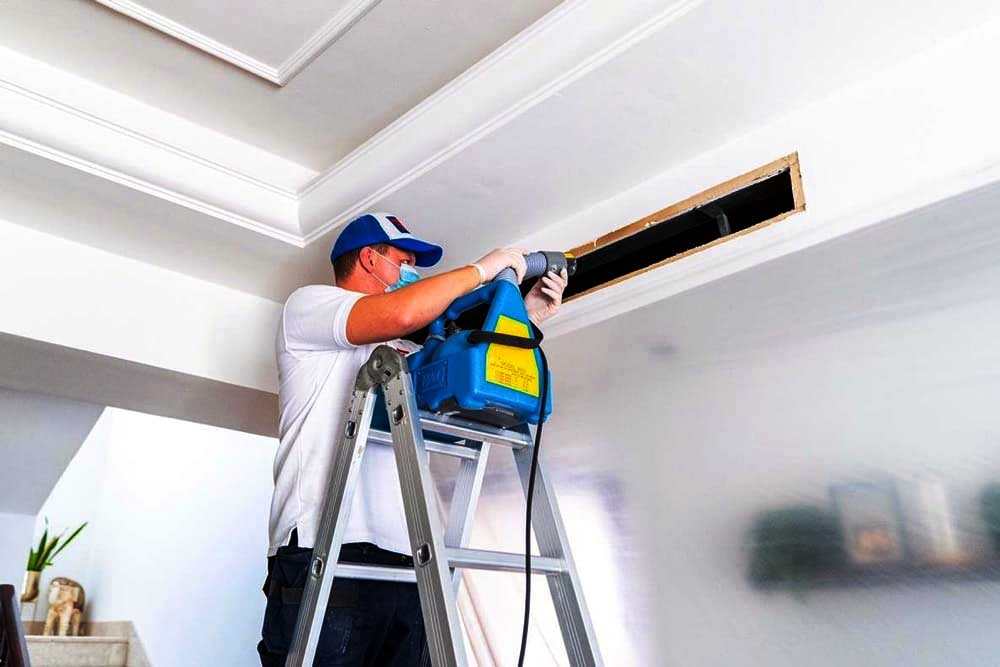
DIY Air Duct Cleaning Equipment Rental: What to Get and Where
You don’t need to own a commercial vacuum to do this well. Home Depot and Lowe’s both rent equipment, and that’s genuinely the move for a one-time job.
The most important thing to rent is a HEPA shop vacuum with duct attachments. Standard shop vacs without a HEPA filter will pull dust out of your vents and push the fine particles right back into the room. That’s not cleaning — that’s relocating the problem. Make sure whatever you rent has a proper HEPA filter before you leave the store.
Beyond that, grab a rotary brush kit—flexible rods with brush heads sized for standard duct openings—and, if your ducts have a lot of bends and long runs, an air compressor with a blow gun to knock loose the debris that the brush can’t reach.
One thing worth knowing before you go: call ahead. Rental availability varies by location, and HEPA vacuums in particular sometimes need to be reserved.
How to Clean Your Air Ducts in Your House Yourself
This is the part most guides rush through. We’re going to slow down here because the order and method actually matter.
Step 1: Kill the Power First
Turn off your HVAC at the thermostat, then go to the breaker and cut power to the air handler entirely. This isn’t optional. If the system kicks on mid-cleaning, it’ll pull loosened debris straight into the unit.
Step 2: Pull Off Every Vent Cover in the House
Every single one—supply vents and return vents both. Drop them in your sink or a bucket with warm, soapy water and scrub them out with a brush. Set them aside for dryer vent services fully before you put them back. Wet vent covers going back into the ductwork is exactly how you invite mold.
Step 3: Vacuum Everything You Can Reach
With your HEPA vacuum and the longest hose attachment available, reach into each duct opening as far as you can. Go slow. The goal is suction and extraction, not just a quick pass. Methodical beats fast every time here.
Step 4: Work Through Each Run with the Rotary Brush
Insert your brush into the duct, work it in 12 to 18-inch sections, and rotate as you go. The bristles dislodge what’s caked onto the duct walls. Follow immediately behind with the vacuum — don’t let that loosened debris just sit there.
Step 5: Don’t Skip the Return Plenum
The return air plenum — the big box attached to your air handler — collects more debris than anywhere else in the system. Vacuum it thoroughly, then wipe the interior walls with a damp microfiber cloth. This part gets skipped in a lot of DIY jobs, and it shouldn’t.
Step 6: Put In a Fresh Filter
New filter, every time. This is the step that actually protects everything you just cleaned. A MERV 8 to 11 filter is the right range for most homes—efficient enough to catch fine particles without putting strain on your blower motor.
Step 7: Power Back Up and Check Airflow
Let the system run for 15 minutes and walk through each room. Airflow should feel consistent across vents. If one room is noticeably weaker than the others, there may be a blockage or a disconnected section deeper in that run — and that’s a sign to get a professional involved before assuming you’re done.
DIY Air Duct Cleaning Services Near Oklahoma City, OK
Oklahoma City homeowners deal with a specific set of conditions that make duct maintenance more than just a general recommendation.
The red clay soil across the metro — everywhere from Edmond down through Moore and out to Yukon — gets pulled inside through any gap in the building envelope. Add in the humidity spikes during summer and the dry, dusty stretches in winter, and you’ve got ideal conditions for buildup and, in some cases, mold inside ductwork.
If you’re in the OKC metro and want to stay on top of things yourself between professional visits, the DIY approach described above works well for routine maintenance. But getting a proper professional inspection every two to three years makes sense in this climate—not as a sales pitch, just as practical advice for the region.
Duct Squad’s cleaning covers the full Oklahoma City metro area. We use truck-mounted negative pressure systems that go considerably further than rental equipment. If you’ve done a DIY clean and something still seems off—weak airflow, lingering odors, visible buildup you couldn’t reach—that’s what we’re here for.
When DIY Isn’t the Right Call
Be honest with yourself about what you’re looking at before you start pulling vents.
If you see anything black or green growing inside a duct opening, stop. That’s potential mold, and disturbing it without containment can spread spores throughout the house. That job needs a professional with the right equipment and remediation protocol.
The same goes for pest evidence — droppings, nesting material, or insects inside the ductwork. Cleaning over an active or past infestation without addressing the source is a temporary fix at best.
Burning or musty smells after a cleaning, a flex duct that’s visibly torn or disconnected, or a complete absence of improvement after a thorough job—all of these point to something beyond what a brush and vacuum can solve.
There’s no shame in that. Knowing where your DIY job ends is the smart call.

People Also Ask
How often should air ducts be cleaned at home?
Every 3 to 5 years is the general recommendation from NADCA. If you have pets, allergies, or have done any major renovation recently, bump that to every 2 years.
Can I clean ducts myself without renting equipment?
You can handle surface-level cleaning with a HEPA shop vac and a long hose. Getting into the main trunk lines properly usually requires rented rotary brush equipment.
Will DIY duct cleaning void my HVAC warranty?
Cleaning registers and accessible ductwork typically won’t. Working on the air handler, blower, or evaporator coil could—check your documentation first.
How long does it actually take?
A 3-bedroom home takes most people 3 to 5 hours. Give yourself a full day if the house is larger or the ducts haven’t been touched in years.
What’s the difference between supply and return vents?
Supply vents push conditioned air into rooms. Return vents pull air back to be filtered and reconditioned. Both need cleaning — returns usually collect more debris.
Final Thought
For most homeowners dealing with standard dust buildup—yes. The process is straightforward, the savings are real, and you’ll genuinely notice the difference in how the system performs afterward.
Just go in with realistic expectations, rent the right equipment, and don’t cut corners on the filter at the end.
And if you get partway through and realize the job is bigger than anticipated—or you’d just rather have it done the first time properly—Duct Squads is a call away. We serve the Oklahoma City metro, and we’re always straight with people about what their system actually needs.